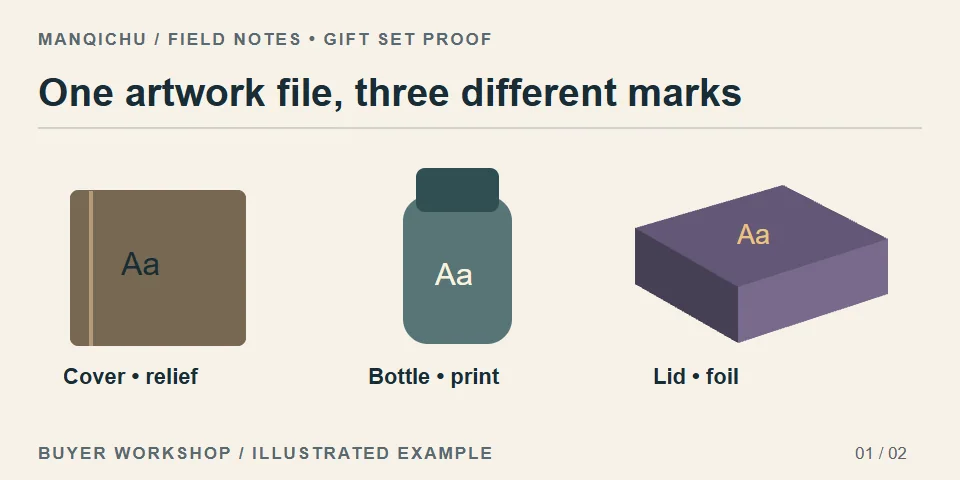
Decide which marks actually have to match
Take a notebook and thermos gift box. The notebook may call for a blind deboss: there is no ink colour to approve. The depth, edge definition and readability at arm's length matter instead. If the flask is laser marked, the colour you see may be exposed material, not a printed version of the brand colour.
Before comparing bids, ask the supplier to identify the proposed process on each part and what it can reproduce on the chosen base colour. The linked set is a catalogue example; a foil, deboss or laser option is not implied unless the supplier confirms it for the selected variant.
- Target
- Separate a colour match from an intentional tone-on-tone mark.
- Sample
- Review the assembled kit as well as each decorated piece.
- Record
- Tie the approved finish to a part and a revision, not just the order number.
Keep the physical reference beside the sample
Send a dated physical target if colour is critical. Record which face of it to use and whether it is coated or matte. Review the pieces together under one agreed light source, then check them under the light in which recipients will open the box. For a repeat order, keep a labelled witness sample away from sunlight.
Ask for an open-box overview and a close-up of each mark, but use a physical sample for colour-critical approval. Automatic white balance and screen brightness can hide exactly the difference that matters. Do not turn a phone photograph into a numerical colour tolerance.
What to do when two of three parts pass
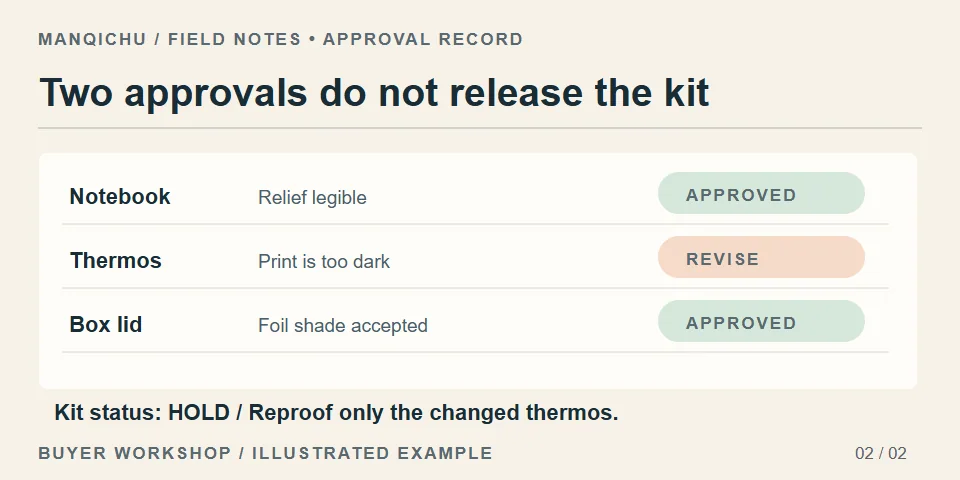
Example approval: the buyer accepts the contrast of a debossed notebook and the foil shade on the lid. The printed thermos looks too dark against its body. Record the first two as approved and the thermos as revise; the kit remains on hold. Ask for a corrected thermos next to the retained parts rather than paying to remake every sample.
If a numerical tolerance is part of the brief, agree the measurement method, target, finish and decision rule before sampling. Otherwise specify who compares the physical pieces, under which light, and what happens if they disagree. A number without a common method is poor protection for either buyer or printer.
Release a named combination, not a colour word
Record the base item colour, mark process, artwork file revision and approved sample reference for each component. Ask whether all items and packaging will be produced by the same team. If a second decorator is involved, ask who supplies its reference and who checks the assembled kit.
Put a change rule on the purchase order: a new blank bottle finish, different notebook cover stock or substituted foil must come back for review before packing. That rule is more useful than writing “match our green” three times.
Three-surface approval record
Copy the brief into an email or download it. Fill one row per decorated part and keep the returned version with your order.
Kit reference / quantity: ___ | Artwork file and revision: ___
Physical target / custodian: ___ | Agreed viewing light: ___
Notebook: base ___ / process ___ / acceptance criterion ___ / sample ID ___ / decision ___
Thermos: base ___ / process ___ / acceptance criterion ___ / sample ID ___ / decision ___
Box: base ___ / process ___ / acceptance criterion ___ / sample ID ___ / decision ___
Open-box review: ___ | Unresolved part: ___ | New proof due: ___
Kit release by / date: ___ | Substitutions requiring renewed approval: ___
Related reading
Before production
Can you send back one approval record showing the process, sample reference and decision for each surface?