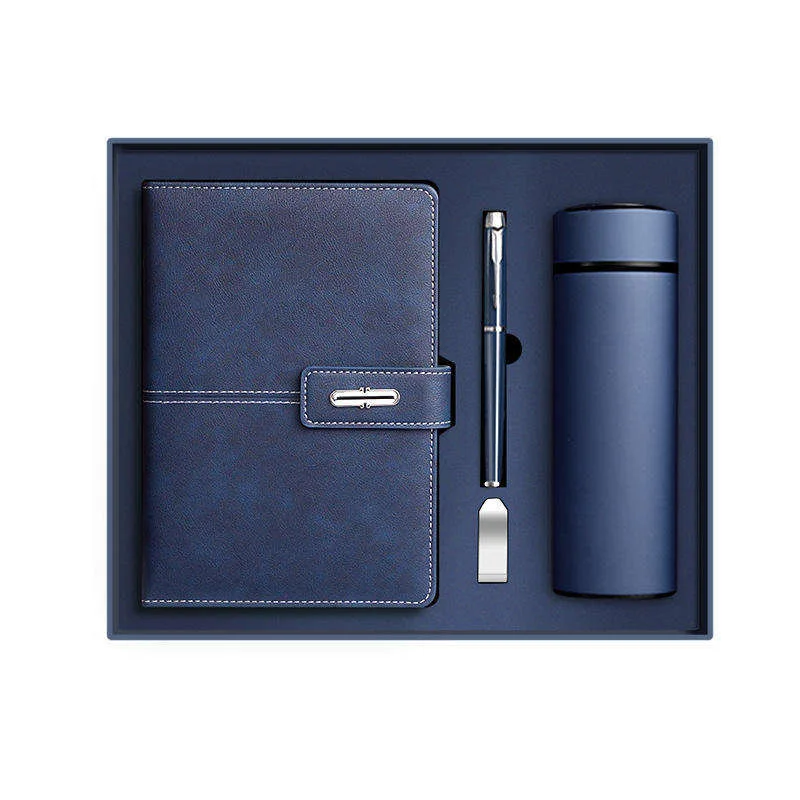
Start with the first week, not the number of items
Decide what a new starter will use. A notebook and pen are useful for orientation; a bottle can be appropriate for office or site visits. More components do not automatically make the kit better. Define the kit’s purpose and pick a short list that fits the people, your budget and the shipment plan.
Build one line item per component
Give every item a reference, quantity, colour, artwork version and packaging instruction. Distinguish the products included from any assortment shown in a listing photo. If the layout matters, ask for a photograph of the exact assembled sample in the final box. Write down any permitted substitutions before production.
Use one proof for the complete kit
Approve artwork for each item and then check it in the set. Logo scale can feel inconsistent when a broad notebook cover sits beside a narrow pen barrel. Ask for a sample arrangement with the packing insert, spacing and orientation you want. Include any printed welcome card in the proof review.
Plan carton counts, damage and reorders
Ask how assembled kits will be packed per carton, what labels are included and what happens if an individual component arrives damaged. Make a separate plan for later starters: reserve spare loose items where practical, and ask whether the same components will be available for a repeat order. When including electronics, disclose the destination and ask which shipping and product requirements apply.
A quote brief that reduces back-and-forth
Example: 300 kits, each containing an A5 notebook and insulated bottle, both with the same logo; individual presentation box; ship to one office by the requested date. Quote the sample, decoration, box, assembly and freight separately, and confirm the exact contents in writing.
Compare real catalogue options
See reference pricing and listed minimums for gift sets.