Start with two comparable, usable kits
Have both bidders identify the shelter, carry bag and the parts needed to pitch it. A rental that includes setup labour is not comparable with a purchase price for a box at the loading dock. Divide any shared delivery charge by the number of tents actually delivered on that run, not the size of your fleet.
Use the catalogue's two-person pop-up tent with carry bag as a reference if that is the format you need. Check the sleeping area against your mats and the site rules before asking for either quotation. The example below is not a price or performance claim for that model.
- Rental
- Ask whether delivery, collection, cleaning and any non-refundable damage fee are included.
- Ownership
- Cost the drying space, staff time and repairs you expect per return.
- Utilisation
- Count outings for this tent, not every event on the organisation's calendar.
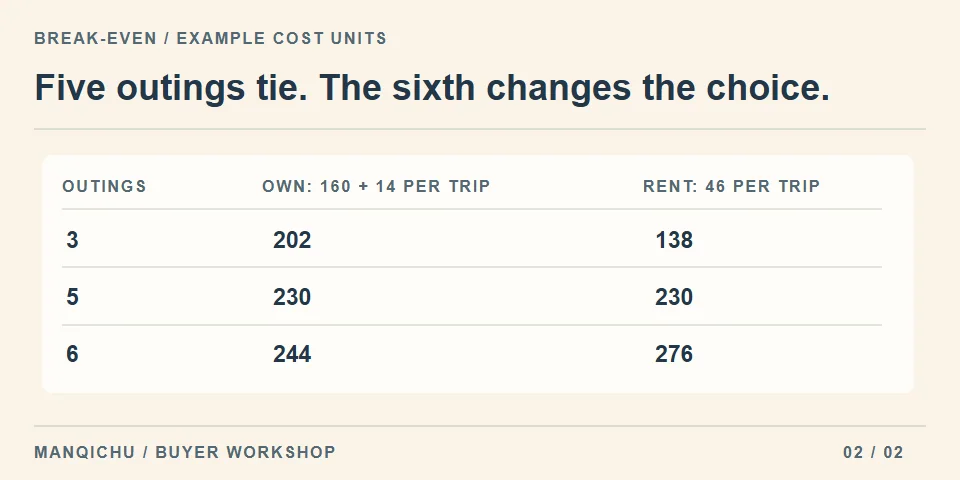
Five outings is a tie, not a saving
Illustrative costs for one tent, in the same currency: 170 to buy and bring it to the store room; 10 expected recoverable value at disposal; 14 per outing to inspect, dry and handle it. A comparable rental costs 46 per outing, delivered and returned. Net fixed cost is 160. The saving per outing is 46 minus 14, or 32. At five outings, both options cost 230. Buying first costs less on the sixth.
If the rental quote falls to 14 or less, ownership no longer saves money per outing in this example. There is no finite break-even trip with a positive fixed cost. Do not interpret a blank or negative result as an instruction to buy. If resale value is speculative, enter zero and check the result again.
Buy the core; price the peak separately
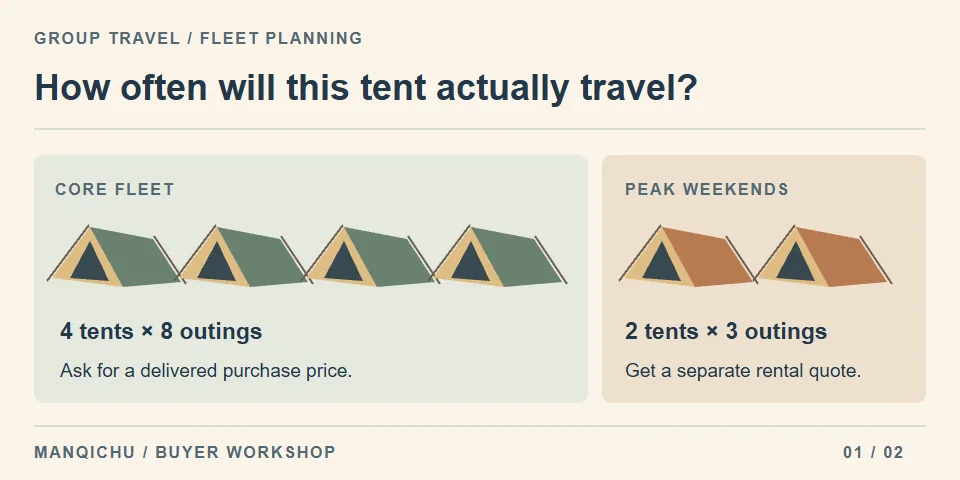
Suppose four tents would travel eight times each, while two more are needed on only three weekends. Using the example costs, one core tent costs 272 to own versus 368 to rent. One overflow tent costs 202 to own versus 138 to rent. Buying four and renting two when needed costs 1,364; renting every deployment costs 1,748. The mixed plan saves 384 against all-rental on those assumptions.
Before committing, get a rental availability date for the peak trips. Ask whether a two-tent top-up attracts its own minimum delivery charge. That one charge can change the overflow decision without changing the case for owning the four core tents.
Price the return trip while the tent is still wet
Find out who receives wet returns, where they can be pitched to dry and who marks one unavailable if a part is missing. If two groups travel on consecutive days, those chores affect the number of usable tents as well as the labour budget. Put fixed annual storage costs in the fixed-cost field for the period considered; do not also charge them per outing.
Record assumptions the committee can revisit: which departures are confirmed, the date the rental price expires, and who can authorise replacements. Compare costs on the same tax basis and separate a refundable rental deposit from an expense. It is cash tied up, not automatically a cost on every trip.
Tent rent-or-buy calculator and two-quote brief
Use one currency throughout. Enter costs for one tent over one planning period; the result distinguishes equality from a real saving.
Compare ownership and rental per tent
Program / planning period: ___ | Tent format and included pitching parts: ___
Core tents and outings per tent: ___ | Overflow tents and outings: ___
Delivered ownership cost plus allocated fixed costs: ___ | Expected residual: ___
Handling, drying and repairs per owned outing: ___
Comparable rental per outing including agreed services: ___
Deposit (separate from expenses): ___ | Peak booking hold / expiry: ___
Please itemise delivery for the main fleet and a two-tent top-up separately.
Related reading
Ask before signing
What would you charge to supply the full core fleet versus just two overflow tents on our three busiest dates?