Before the order: settle what a claim can actually achieve
Use the exact mug and pack-out in your request. A sample of a ceramic blank tells you about the mug, not how a decorated order will travel. Ask how many pieces go into each carton, whether handles are separated, and whether the quoted pack is for a pallet shipment or individual parcels.
Ask who receives the report and when the clock starts: delivery to a forwarder, delivery to your warehouse, or another handover point? Write down the agreed evidence and remedy. A replacement dispatched after an event may be less useful than credit; credit will not refill an empty table. Do not assume either is offered.
- Unit
- Count an affected mug once, even if both its handle and rim are damaged.
- Carton
- Photograph the outer label and the internal divider before discarding packaging.
- Remedy
- Ask who pays for replacement packing and freight, not only the replacement unit.
At receipt: preserve the trail from carton to mug
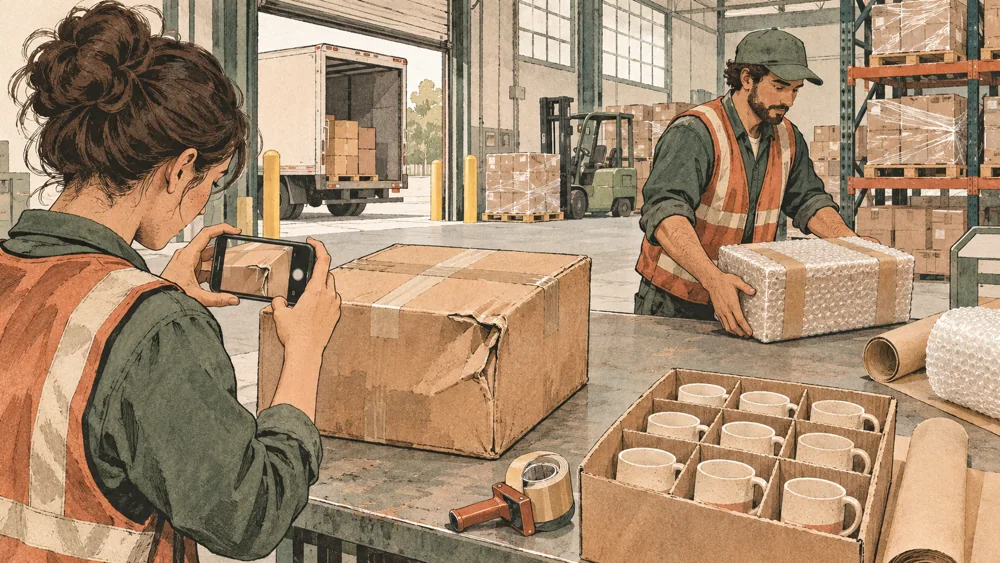
Give each affected carton a short identifier. Before opening a visibly damaged carton, photograph its label and damaged face. Record the seal and internal packing, then photograph the affected mug and its position if it is safe to do so. Keep chipped or cracked mugs out of usable stock.
Record unopened cartons as unopened, not inspected and fine. If you open only a sample, give the supplier the number actually examined. Record unpacking time and who checked the count; keep personal shipping-label details out of copies shared beyond the claims team.

A worked example: a shortage is not breakage
Suppose a purchase order is for 240 mugs in ten cartons of 24. You open and count every carton. Nine cartons contain 24 mugs each, the tenth contains 22: 238 physically received and two short. Of the 238 received, five different mugs are chipped or cracked. You have 233 usable pieces, seven below the order quantity.
Report two shortages and five damaged units, not seven broken mugs. The observed damage share among received pieces is 5 ÷ 238, about 2.1%. That percentage is a description of this example, not an industry allowance, a testing result or a threshold for reimbursement.
When seven usable mugs are missing
Record the date by which replacements would still be useful. Ask for the cost and delivery date of sending seven pieces now versus adding them to a later shipment. Include replacement packing, freight and any extra receiving work. Keep the two short units identifiable if the supplier handles shortages differently.
If only one carton has been opened, send an initial notice rather than extrapolating one carton’s damage to the shipment. Ask the supplier how to extend inspection and whether original packaging must be retained before disposal.
Carton-level receiving log and remedy request
Copy one line per carton. Leave unknown quantities blank; a blank is not a claim for zero.
PO / model / decoration: ___ | Delivery point and receipt date: ___
Agreed claim contact / deadline / evidence: ___
Carton ID: ___ | Expected: ___ | Received: ___ | Short: ___
Distinct damaged mugs: ___ | Usable: ___ | Not yet inspected: ___
Observed issue / photo IDs for label, packing and mug: ___
Total ordered: ___ | Physically received: ___ | Short: ___ | Damaged: ___ | Usable: ___
Replacement required by: ___ | Acceptable alternatives: ___
Please confirm the remedy separately for shortage and damage, who pays replacement freight, and whether to retain the packing.
Related reading
Agree the remedy before dispatch
For this mug and packing method, which photos and counts do you need, how soon must we report them, and who pays freight if replacements are agreed?